










Qualified Dietitian and Nutritional expert, Vanessa Quarmby (who also happens to be working with Sally Gunnell at the moment!) gives us some top tips for preparing for a Ride25 cycling tour…
The aim is to ensure that your body has stored optimal levels of glycogen. The more muscle glycogen your body as stored, the more it will protect you from ‘bonking’ and help you to cycle longer and at a higher intensity. There are 3 ways to do this:
1) Eat plenty of carbohydrates leading up to the event. It is good to start this about 3 days before you embark on your cycling tour. This process is often called ‘carb-loading’ and helps your body to store glycogen prior to the ride. You should aim to eat larger than normal quantities of starchy carbohydrates at every meal, such as pasta, bread, rice, potatoes, chapatis etc.
2) Make sure that hydration is optimal, so drink lots of water in the days leading up to your Ride25 tour. This will enhance the storage of glycogen and mean that you are in the best state to start the tour and enjoy yourself.
3) Reduce the amount of training in the week leading up to the tour.
Cycling for long distances uses up a lot of energy. In order to keep your energy levels at their optimum throughout the tour, it is important to stick to the mantra ‘eat before you’re hungry and drink before you’re thirsty’. If you get your carbohydrate and fluid intake right, your endurance will be better.
 What to eat:
Whilst cycling, you should aim to eat something small every 30-45 minutes, even in the first hour when you’re probably not even hungry. Crackers, bananas, bread, oat cakes, carbohydrate gels are all fine. The benefit of cycling as a sport is that it is relatively easy to carry snacks and fluids. It is also easier on the stomach as there is little bouncing, which means that solids can be eaten with relative ease whilst cycling unlike other sports such as running. When you stop for meals, i.e. lunch and dinner, you should stick to high carbohydrate choices (i.e. bread, pasta etc) to build your glycogen stores back up.
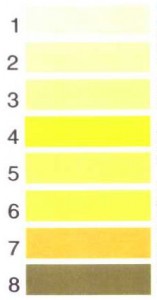
Fluid intake is really important too whilst you are cycling, so try to develop the habit of drinking frequently, every 15 minutes, regardless of thirst. Water is the best option as it is natural. A good indication of hydration is the colour of your wee. To make sure you are well hydrated aim for ‘straw’ coloured wee. Take a look at this chart – if the colour of your wee is between 1-3 you are well hydrated. If it is between 4-8 you must hydrate yourself.
Leave a Reply